







Centrifuge Machine Uses:
Industrial Applications Explained
From chemical plants to food and beverage lines, wastewater treatment, and pharmaceutical manufacturing — where centrifuge machines are used, and how to choose the right type for your process.
What Is a Centrifuge Machine Used For?
A centrifuge machine is used wherever a process needs to separate solids from a liquid, or one liquid from another, faster than gravity settling allows. Spinning a mixture at high speed generates centrifugal force that pushes denser material outward while lighter material stays closer to the center — the same principle whether the machine is separating crystals from a mother liquor, cream from milk, or biosolids from wastewater. For a closer look at how the bowl, scroll, and differential speed work together in a continuous unit, see our guide on how a decanter centrifuge works.
Because the underlying mechanism is so versatile, centrifuge machine uses span a wide range of industries. Below is a rundown of where centrifuges do the heaviest lifting, followed by guidance on matching centrifuge type to your process.
Centrifuge Uses By Industry
Chemical & Petrochemical Processing
Chemical manufacturers use centrifuge equipment to separate reaction products from mother liquor, recover catalysts for reuse, and wash and dewater polymer or resin crystals before drying. Continuous processing keeps pace with reactor output, so decanter-style units are common wherever a plant needs to handle a steady slurry stream without interrupting the line. Typical duties include separating pigments, agrochemical intermediates, and specialty polymer slurries, where consistent cake dryness has a direct effect on downstream drying costs.
Corrosive or abrasive feeds are common in this sector, so buyers typically specify stainless or alloy wetted parts and hard-faced scroll components — the same specifications worth checking on any used decanter centrifuge before purchase. Because wear parts on abrasive duty have a shorter service life than in cleaner applications, it also pays to confirm spare-parts availability before committing to a particular make and model.
Pharmaceutical Manufacturing
In pharmaceutical manufacturing, centrifuges isolate active pharmaceutical ingredient (API) crystals from solvent, wash the cake to remove residual mother liquor, and recover intermediates for further processing. Batch basket centrifuges are common here because they give operators precise control over cake washing and allow the bowl to be opened and cleaned between product changeovers — an important consideration for GMP facilities running multiple products through the same equipment.
Because contamination control matters as much as separation efficiency, pharmaceutical buyers should confirm a used unit's wetted-parts material, seal design, and cleaning history before it enters a regulated process.
Food, Beverage & Edible Oil Processing
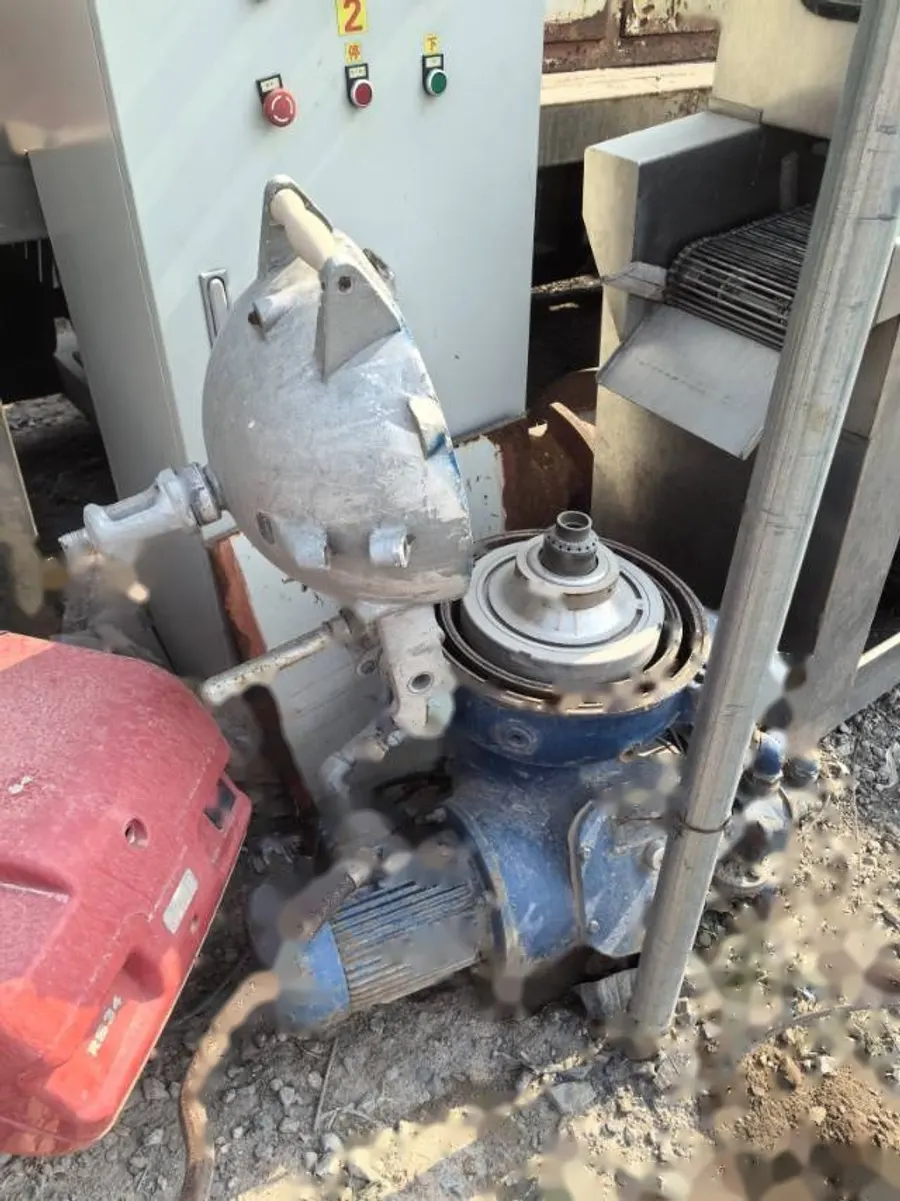
Food and beverage processors use centrifuge machines to clarify juice and beer, separate cream from milk, and degum and refine edible oils. These are continuous, high-throughput duties, which is why disc stack centrifuges — with their fast-spinning stack of conical discs — dominate clarification and liquid-liquid separation work in dairies, breweries, and oil refineries.
Hygienic design is non-negotiable in this sector: look for sanitary fittings, CIP-compatible bowls, and food-grade seal materials when evaluating a used disc stack unit for a food or beverage line. The same equipment is also used to recover valuable byproducts, such as citrus pulp fines or brewers' yeast, that would otherwise be lost to the waste stream.
Wastewater & Sludge Dewatering
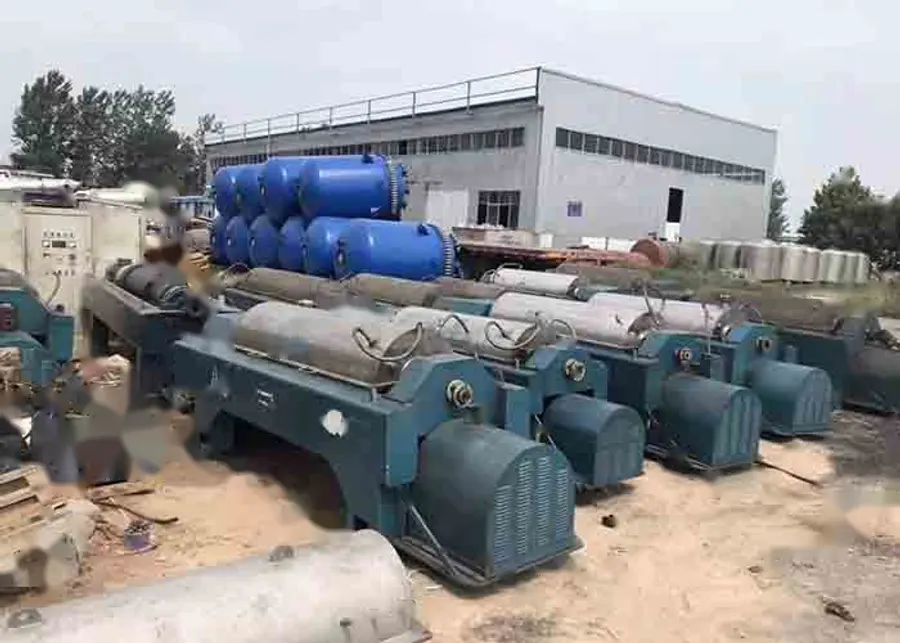
Municipal and industrial wastewater treatment plants rely on decanter centrifuges to dewater biosolids before disposal, land application, or incineration. Reducing sludge volume this way cuts hauling and disposal costs significantly compared with leaving sludge in lagoons or pressing it to a wetter cake.
Feed consistency varies more in wastewater duty than in most chemical processes, so a used decanter centrifuge for this application should have a variable differential-speed drive and a track record of handling fluctuating solids loading.
Fermentation & Biotech
Breweries, bioethanol plants, and biotech manufacturers use centrifuge separation to recover yeast and other biomass from fermentation broth, clarify the liquid product, and concentrate cell mass for downstream processing. Continuous decanter and disc stack designs both see use here, chosen based on cell size and how shear-sensitive the biomass is.
Because live cultures and biological material are shear-sensitive, feed rate and bowl speed are typically set conservatively compared with purely chemical separation duties.
Mining & Mineral Processing
In mining and mineral processing, centrifuges dewater tailings before disposal, recover fine mineral concentrate that would otherwise be lost to overflow, and reclaim drilling fluid on site. The abrasive nature of mineral slurries makes wear-resistant tiles and hard-faced scroll flights standard specifications rather than options. Because these operations often run continuously at remote sites, plants also tend to keep a spare rotating assembly on hand to limit downtime between services.
5 Common Uses of a Centrifuge
If you just want the short version, these are the 5 uses of centrifuge equipment that come up most often in the quote requests we receive:
- Chemical separation — recovering reaction products, catalysts, and polymer crystals from process slurries in chemical plants.
- Pharmaceutical processing — isolating and washing API crystals from mother liquor before drying.
- Food and beverage clarification — one of the most common high speed centrifuge uses, polishing juice, beer, milk, and edible oil on continuous lines.
- Wastewater dewatering — cutting the volume of municipal and industrial biosolids ahead of disposal.
- Mineral processing — dewatering tailings and recovering fine concentrate at mine sites.
The machine used for centrifugation differs in each case — a decanter for high-solids dewatering, a basket for batch cake washing, a disc stack for fine clarification — and most of the used centrifuge equipment we sell goes into one of these five duties. The next section explains how to match the type to your feed.
Choosing the Right Centrifuge Type for Your Application
The three centrifuge machine types you'll most often see for sale — decanter, basket, and disc stack — are built for different duties. Decanter centrifuges run continuously and handle higher solids concentrations, making them the default choice for dewatering, chemical slurry separation, and wastewater treatment. Basket centrifuges operate in batches and give the best cake-washing control, which is why pharmaceutical and specialty chemical producers favor them for lower-volume, high-purity separations. Disc stack centrifuges spin at higher speed for finer clarification and liquid-liquid separation, and are the standard for food, beverage, and oil processing.
If you're not sure which type fits your feed, our team can help match bowl size, throughput, and materials of construction to your process. Browse our current inventory of used centrifuges for sale, or see our full range of centrifuge and separation-filtration equipment for filter presses and other complementary technology.
SIGMA Process Equipment stocks used decanter, basket, and disc stack centrifuges for sale, inspected and ready to ship. Request a quote with your feed material, throughput, and industry.
FAQ — Centrifuge Machine Uses
Need a Used Centrifuge for Your Process?
Tell us your feed material, throughput, and industry — we'll match you to an inspected decanter, basket, or disc stack centrifuge from current stock.
Request a Quote